Temperature stability
How tightly the system can warm and hold the intended zone without dangerous overshoot or uneven heat distribution.
This page is for the technical audience: serious beekeepers, collaborators, and people who want to understand the heat-treatment concept beyond the pitch.
HiveGuard is framed as a portable heat-based mite treatment concept for one 10-frame deep Langstroth box at a time. The design idea centers on monitored heat, controlled timing, field portability, and natural management rather than chemical strips or synthetic residues.
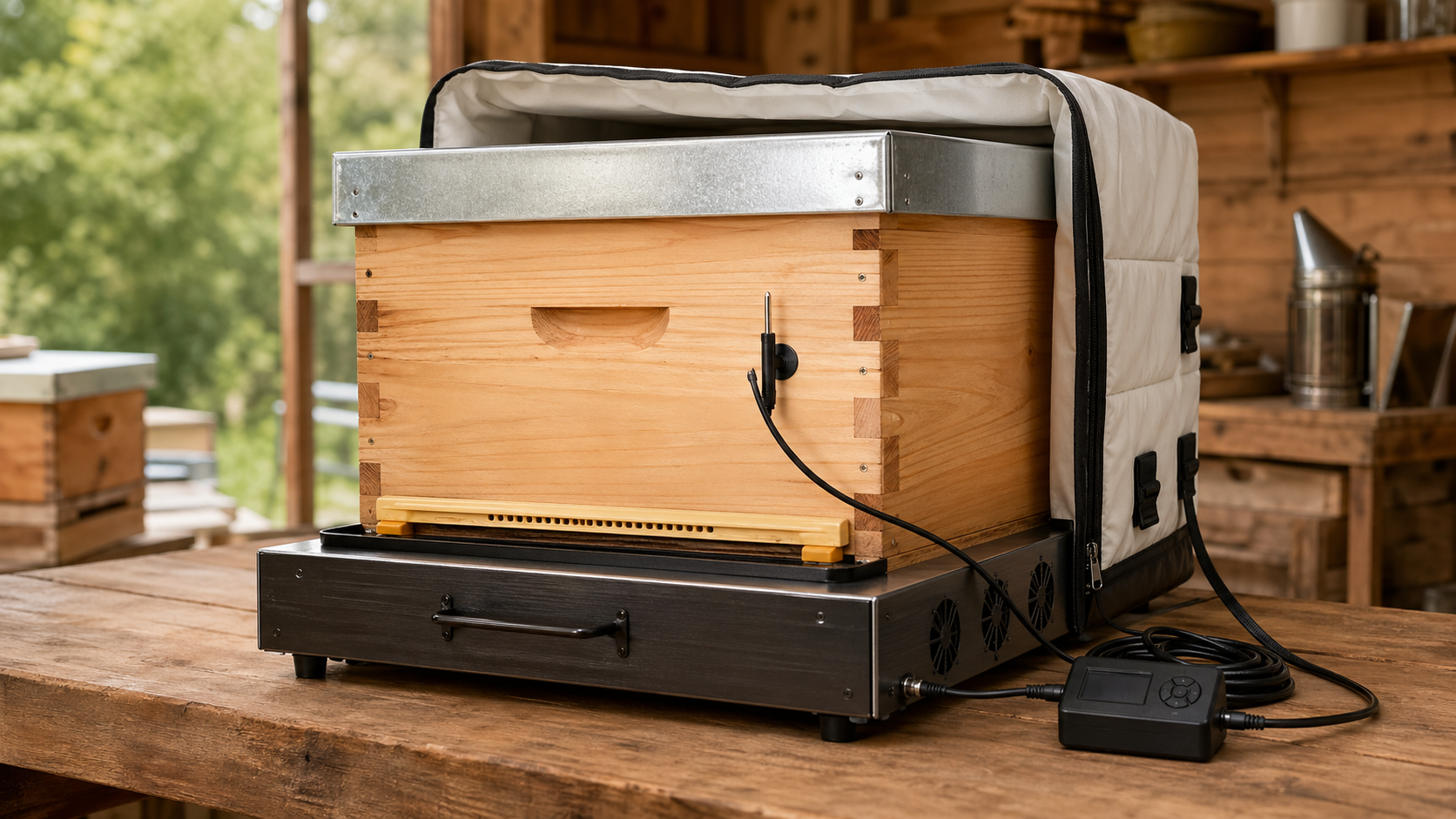
The HiveGuard Heat Box is positioned as a portable thermal treatment system designed for one 10-frame deep Langstroth box at a time. The concept uses controlled heat over a timed treatment cycle to help reduce mite pressure without chemical strips, residues, or synthetic treatments.
The product concept combines a heated base, insulated cover, probe-monitored brood-zone temperature, battery-powered portability, and automatic shutoff. The goal is to provide a more field-usable non-chemical treatment workflow for beekeepers who want a natural-management toolset.
Thermal mite treatment is not just "add heat and hope." It depends on repeatable temperature control, careful probe placement, time-at-temperature consistency, and operating instructions that are validated before live use.
Bella Bees is not claiming that this concept eliminates mites or replaces disciplined hive management. The correct language is that it is a heat-based mite control concept intended to help reduce mite pressure when carefully monitored and properly validated.
Thermal mite treatment requires accurate temperature control and careful monitoring. Final product settings, cycle times, approved probe locations, and operating instructions must be validated before live colony use.
How tightly the system can warm and hold the intended zone without dangerous overshoot or uneven heat distribution.
Where the approved monitoring point should be for consistent readings and repeatable treatment logic.
How different woodenware, insulation behavior, and real apiary conditions affect treatment performance.
Whether the planned warm, hold, and shutoff pattern performs consistently under realistic use conditions.
Bella Bees wants beekeepers to become more self-sufficient over time. That includes hive inspections, mite monitoring, splits, queen management, feeding strategy, winter preparation, honey handling, natural treatment planning, and better records.
The philosophy stays chemical-free and practical, focused on long-term colony health and careful decision-making.
The intended audience is people who enjoy the craft of keeping bees and want thoughtful tools, better timing, and healthier colonies.
Sensors, records, and AI-assisted planning are meant to support better timing and clearer judgments around hive management.
Not artificial bees - just better tools, better timing, and stronger decisions around natural colony behavior.
If you want to talk testing, tell Bella Bees what kind of yard you run and how you want us to reply. We will text or email you - just let us know which you prefer.
Share your location, number of hives, hive configuration, whether you run single deeps, double deeps, or nucs, how you currently monitor mites, and what kind of trial or treatment discussion you want to have. If you want a text reply, include your number.